From Geopolitics to £/kWh: Why energy prices are rising - and what it means

Geopolitical instability - including tensions involving Iran - is having a direct impact on energy prices in the United Kingdom and Ireland.
For solar installers, understanding this link is essential - because it directly influences customer demand, system value, and the case for solar, battery storage and integrated energy solutions.
Why geopolitics impacts energy prices
A significant share of global oil and gas supply passes through the Strait of Hormuz. When geopolitical tensions rise:
- Global oil and gas prices increase
- Wholesale energy markets react immediately
- Electricity costs rise across Europe, including the UK and Ireland
Even without direct imports from Iran, both countries are affected - because energy markets are globally interconnected.
Why gas prices drive electricity prices in the UK & Ireland
Natural gas remains a key part of electricity generation in the UK & Ireland.
Gas power stations are used to:
- Meet peak electricity demand
- Provide backup when renewable generation is low
- Balance the electricity grid
Crucially, electricity markets operate on a marginal pricing model. This means the most expensive source of electricity - typically gas - sets the price for all electricity.
The result: When gas prices rise, electricity prices rise - even when renewables are generating a large share of power.
How rising energy prices are reshaping demand
Higher energy prices, driven by geopolitics, are changing how customers think about energy. Homeowners and businesses are increasingly looking for:
- Protection from rising electricity bills
- Greater energy independence
- Long-term cost certainty and control
This is accelerating demand for:
- Solar PV systems
- Battery storage
- Smart home energy management systems (HEMS)
- Integrated, sector-coupled solutions
(e.g. solar + storage + EV charging + heat pumps)
The financial reality: why customers are acting now
For many homeowners and businesses, this is no longer theoretical — it’s financial.
Today, a well-designed solar PV and battery system can:
- Lock in electricity costs at ~10p/kWh
- Cover up to 65% of annual energy demand
Compared to:
- ~30p/kWh from the grid, which remains exposed to global volatility and geopolitical risk -- with a rumoured increase of the price cap to almost £2,000 set to happen in July according to a report by energy consultants Cornwall Insight Ltd.
The result:
- Potential savings of 70%+ on electricity costs
- Greater predictability in long-term energy spend
With intelligent energy management, these savings can be extended further — supporting:
- EV charging
- Heating (e.g. heat pumps)
- Overall household or business energy optimisation
This is why customer conversations are shifting from “should I go solar?” to “how much independence can I achieve?”
What this means for solar installers.
Geopolitically driven price volatility is transforming the installer role.
Opportunities:
- Increased demand for complete energy systems, not just panels
- Stronger business case for battery storage and energy management
- Greater value in offering integrated, future-proof solutions
Challenges:
- Customers expect clearer financial justification across entire systems
- More complex system design and integration
- Higher expectations on performance, reliability and support
Installers are no longer just selling solar systems — they are delivering intelligent, integrated energy solutions.
The Solarwatt perspective on energy security
With over 30 years of experience, Solarwatt focuses on high-quality, durable and responsibly produced solar solutions - designed to work as part of a wider energy ecosystem.
From a Solarwatt perspective, geopolitics reinforces a clear shift:
- Energy independence is becoming essential
- Customers want control, not just generation
- Integrated systems combining solar, storage and energy management unlock maximum value.

Why geopolitics strengthens the case for integrated energy
Geopolitics now plays a central role in shaping energy markets. As long as electricity prices remain linked to fossil fuels:
- Global instability will continue to impact local energy costs
- Price volatility will remain a persistent risk
For installers, the message is evolving: This is no longer just about solar. It’s about delivering integrated energy systems that provide:
- Stability
- Independence
- Long-term cost control
From geopolitics to energy independence
Geopolitics is no longer abstract — it is directly impacting energy costs in the United Kingdom and Ireland.
As long as electricity prices remain linked to fossil fuels:
- Global instability will continue to drive local price volatility
- Customers will remain exposed to unpredictable costs
But there is now a clear alternative. With solar, storage and energy management:
- Energy costs can be significantly reduced and stabilised
- Dependence on volatile global markets can be dramatically reduced
- With an integrated HEMS, savings can be extended to the 'last-mile', and control given to the customer in one easy-to-manage app
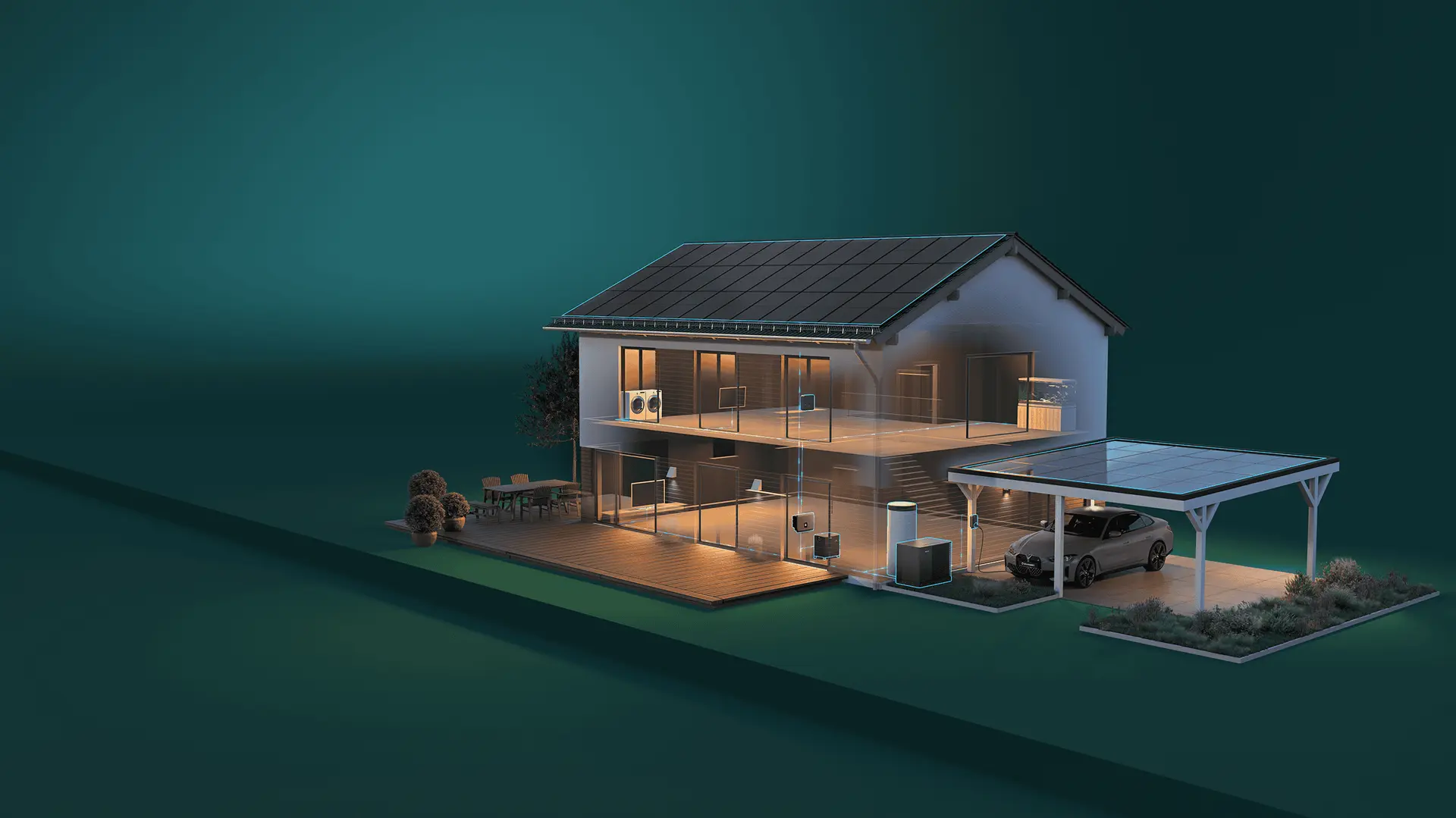
In simple terms: Customers can move from ~35p/kWh grid electricity
➡ to ~10p/kWh self-generated solar energy
➡ while covering up to 65% of their demand
This is where the right system - and the right partner - becomes critical.
Solarwatt’s integrated approach, combining high-quality solar, battery storage and intelligent energy management, enables installers to deliver exactly this outcome — helping customers achieve greater independence, stability and long-term cost control.
This is no longer just about sustainability. It’s about taking control of energy costs in an increasingly unpredictable world.